Sonic Boom in Essex: Loud Bang from RAF Jets on 15 August 2025
On 15 August 2025, many people in Essex heard a sudden sonic boom in Essex. It came as a very loud bang that shook houses a little and made windows rattle. Some folks felt scared at first and wondered if there had been an explosion or something wrong. But it was not dangerous. The sound came from RAF jets that had to fly very fast to help a civilian plane. The plane had lost contact with air traffic control, and the jets made sure everyone stayed safe.
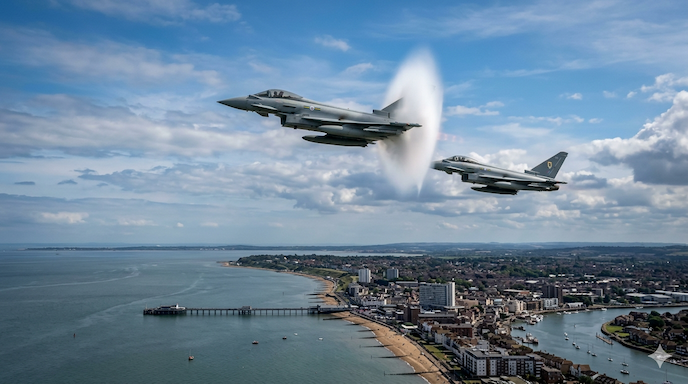
The event happened around 11:40 in the morning. Three RAF Typhoon fighter jets took off quickly. They flew faster than the speed of sound to reach the plane. That fast speed created the shockwave that people heard as a loud bang. The sonic boom in Essex spread across parts of southeast England but caused no harm. The plane landed safely at Stansted Airport, and the jets went back to their base. It was a normal job for the RAF to keep UK skies secure.
Many residents felt the Essex loud bang and talked about it right away. One person in Chelmsford said it made the upper part of the house shake. In Braintree, a couple described it as a thunderous clap that echoed. The wife visiting from Singapore had never heard anything like it and thought it might be a bomb at first. In North Kent, someone felt the whole house shake and worried about an explosion. A woman in Bexley was with her horse when the ground seemed to shake, and the horse became very alert. She wondered if it was a gas explosion. In Bury St Edmunds, the bang even rattled a back door. These stories show how surprising the noise felt, even though it passed quickly.
What Exactly Happened on 15 August 2025
Early that Friday, a private jet flew from Nice in France toward London Stansted. The plane was registered in San Marino. While flying over Cambridgeshire, it suddenly stopped talking to air traffic control. That loss of contact is something the UK takes seriously because safety comes first.
The RAF got the call and acted fast as part of their RAF quick reaction alert (QRA) system. Three RAF Typhoon jets left their base at RAF Coningsby in Lincolnshire. The pilots flew at high speed, including supersonic speed, to catch up with the civilian plane. Once they reached it, they talked to the pilot again, and communication came back. The jets then guided the plane safely to Stansted Airport, where it landed around 12:11. Essex Police officers checked the ground and found nothing of concern. The RAF spokesperson explained that communications were re-established and the aircraft was safely escorted. The Typhoons then returned to base.
This quick action stopped any possible risk. The plane had been flying normally before the radio issue, and no real problem was found on board. It shows how well the system works to protect everyone in the air and on the ground.
Why the Loud Noise Travelled So Far
The bang heard across Essex and nearby areas happened because the jets flew faster than the speed of sound. Sound moves at about 761 miles per hour near the ground. When something goes faster, the air waves pile up and form a strong shockwave. That shockwave travels down to the ground, and people hear it as one big bang. At higher altitudes, the cone of the shockwave can cover a wide area, like twenty miles across. That is why so many places from Essex to parts of London and Kent heard the loud explosion sound Essex even though the jets were high up.
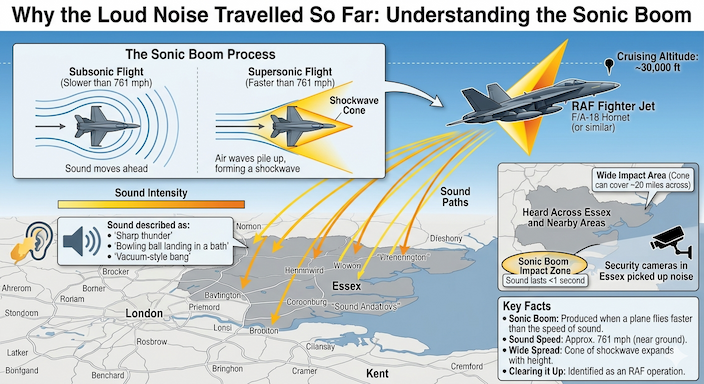
People described the sound in their own words. Some said it felt like thunder, but very sharp. Others compared it to a bowling ball landing in a bath or a vacuum-style bang. Security cameras in Essex even picked up the noise on video. It lasted less than a second, but the surprise made it feel much stronger. The mystery boom Essex got cleared up fast once the RAF and police spoke out.
Simple Science Behind What Causes a Sonic Boom
A sonic boom is easy to picture once you think about it. Imagine pushing your hand through water slowly. The water moves gently around it. But if you push your hand very fast, the water piles up in front and makes a splash. A plane does something like that with air.
Normal planes push air waves ahead of them at the speed of sound. When a jet goes faster than the speed of sound, those waves cannot move out of the way. They bunch together and create a shockwave. The shockwave from supersonic flight is what reaches the ground and makes the loud noise. It is the same idea as the wake behind a fast boat, but in the air.
RAF Typhoon jets can fly almost twice the speed of sound up to around 1,381 miles per hour. During the sonic boom in Essex they had permission to go supersonic because they needed to reach the plane quickly. The boom is not an explosion. It comes only from the speed and the air pressure change. No fire or damage like a real blast. Most of the time, the pressure is very small, less than half a kilogram on each square foot. That is not enough to hurt strong houses.
Why windows shake during sonic boom is simple. The fast pressure change pushes against the glass for a tiny moment, just like loud thunder or a big truck driving past. Houses shaking from jet noise can feel scary, but it is normal and passes right away. The difference between explosion and sonic boom matters a lot. An explosion releases energy with heat and pieces flying. A sonic boom is just moving air due to speed. It makes noise, but usually no real harm.
How the RAF Quick Reaction Alert Works Every Day
The United Kingdom keeps its skies safe with the RAF quick reaction alert (QRA). Fighter pilots and jets stay ready all the time, day and night. Radar and air traffic control watch every plane. If a plane loses contact or something seems wrong, the team checks it fast.
They call it a military aircraft interception procedure. The goal is always to find out what is happening and fix it safely. In this case, three Typhoon jets went up to meet the civilian plane that had an air traffic control communication loss. The pilots made visual contact, talked to the crew, and guided the plane to land. Once everything was fine, the jets went home.
This kind of RAF intercept plane work happens when needed to protect UK airspace. The Typhoon is a strong modern jet with great speed and sensors. It helps the pilots do their job well. The UK defense response aircraft makes sure small issues do not turn into bigger ones. People on the ground may hear fighter jet noise UK sometimes, but it means the system is working.
Is a Sonic Boom Dangerous and What to Know
Many people ask is sonic boom dangerous. For most people and normal houses, the answer is no. The pressure change is small and short. It can startle you or make animals alert, but it does not last. Strong booms might affect very old or weak windows in rare cases, but that rarely happens with these military flights.
The sonic boom UK events like this one stay rare over land because normal planes do not fly supersonic. The RAF only does it when necessary for safety. After the sonic boom in Essex, the police and RAF both said there was nothing to worry about on the ground. Everyone stayed safe, and the plane landed without any trouble.
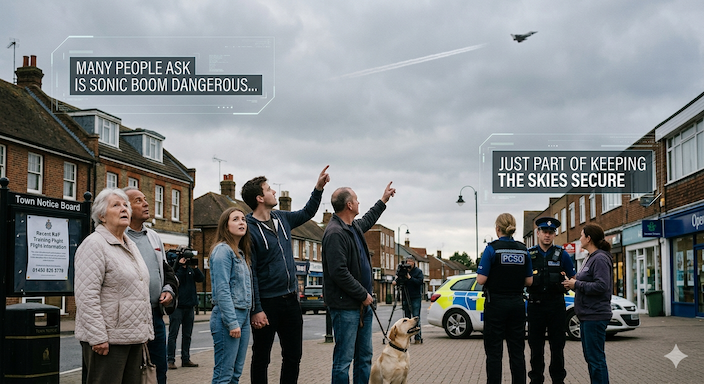
If you live near flight paths, it helps to know that sudden loud noises can come from jets on quick missions. Checking official news or police updates gives clear answers fast. Most times, the sound is just part of keeping the skies secure.
Looking at Similar Events and Why They Happen
The sonic boom in Essex fits with other times when RAF jets Essex respond to lost contact. Southeast England sees more of these because of busy air routes and bases nearby. Sonic boom London areas sometimes hear them too. Each time the story is similar. Jets go up fast, contact gets made, and the plane lands safely.
Aircraft interception UK follows clear steps to keep everyone protected. The civilian plane lost contact here was sorted quickly. No threat appeared, and normal flying continued. These events teach us more about what causes a sonic boom and how fast jets create the jet breaking sound barrier.
Understanding the science turns a scary noise into something normal. The supersonic jet UK flights happen only for important reasons. The RAF Typhoon sonic boom shows the power of the jets but also how carefully they are used.
Everyday Life Near Busy Skies
People in Essex and other parts of England get used to aircraft sounds over time. Sometimes the noise is louder when jets train or respond to calls. Knowing the difference between normal plane noise and a sonic boom helps calm worries. The loud noise England today reports is usually explained within hours by the RAF or police.
If you hear a big bang, look for updates from trusted sources. Most times, it turns out to be a quick safety check in the sky. Families can talk about it so children and visitors understand it is not something bad. The system works hard so flights stay safe every day.
FAQs
What caused the sonic boom in Essex on 15 August 2025?
The sonic boom was caused by Royal Air Force fighter jets flying faster than the speed of sound. They were responding to a civilian plane that had lost contact with air traffic control and needed to be checked for safety.
Was the loud bang in Essex an explosion?
No, it was not an explosion. The loud noise came from a sonic boom, which happens when an aircraft breaks the sound barrier. Unlike explosions, it does not involve fire, damage, or danger.
Why did houses shake and windows rattle?
The shaking happened because of a sudden pressure wave created by the jet. This pressure change is very quick and can make windows vibrate or houses feel like they have moved slightly, similar to thunder.
Is a sonic boom dangerous to people?
In most cases, a sonic boom is not dangerous. It may startle people or animals, but it usually does not cause harm to humans or strong buildings.
Why were RAF jets flying so fast over Essex?
The Royal Air Force jets were part of a Quick Reaction Alert mission. They needed to reach a civilian aircraft quickly after it lost communication with air traffic control.
Conclusion
The sonic boom in Essex on 15 August 2025 came from RAF Typhoon jets on a quick mission. A civilian plane lost contact with air traffic control, so the jets flew fast to help. They created a loud bang when they went supersonic, but everything ended safely. The plane reached Stansted Airport, contact came back, and the police found no problems on the ground.
This event helps explain what causes a sonic boom and why it can make houses shake for a moment. It also shows the good work of the RAF quick reaction alert (QRA) in protecting UK skies. The sonic boom in the UK was startling but harmless, and it reminds us how professionals keep air travel secure without most people even noticing.