Runlhlp File Detected? Understand What It Means and How to Stay Safe on Your PC
Imagine this: You’re browsing your files or checking running programs on your Windows computer, and suddenly, you see something called runlhlp. It pops up in a scan or in your task list, and your heart skips a beat. Is this a suspicious system file? Could it be malware disguised as a system file? Don’t panic. Many everyday users just like you encounter this, especially if you’ve got older software lurking in the background.
In this guide, we’ll break down everything about Runlhlp in plain, simple words. We’ll cover its background, why it shows up now, and easy ways to tell if it’s safe. By the end, you’ll know how to handle it with confidence. Whether you’re a busy parent sharing a family laptop or someone tinkering with old games, this is for you. Let’s dive in and make your PC feel secure again.
What Exactly Is Runlhlp?
Runlhlp sounds technical, right? But it’s really just an old helper from the early days of Windows. Think of it like a dusty instruction manual from the 1990s that your computer still remembers.
The Roots of Runlhlp in Windows History
Back in the 1990s and early 2000s, Windows used a system called WinHelp to show help info for programs. This relied on files ending in .hlp, like little pop-up guides. To open them, Windows needed tools like WinHlp32.exe. Runlhlp was a small wrapper—a go-between—that made sure those help files launched smoothly. It lived quietly in the background, only waking up when you clicked “Help” in an app.
Microsoft dropped this old setup after Windows XP. Newer versions, like Windows 10 and 11, switched to web-style help files (.chm) that don’t need Runlhlp anymore. Today, if you see runlhlp, it’s likely a leftover. But why does it stick around? We’ll get to that.
Common Forms: Runlhlp.exe and Beyond
Most folks spot Runlhlp as runlhlp.exe, a tiny executable file. It might also appear as a .dll (dynamic link library) version. These files are super small, often under 50KB, and don’t do much on their own. They’re like quiet assistants waiting for a call that never comes in modern setups.
At the peak of WinHelp’s use, millions of programs bundled these files. By 2005, over 80% of Windows apps used .hlp formats, according to old Microsoft docs. That’s why echoes of Runlhlp still echo today.
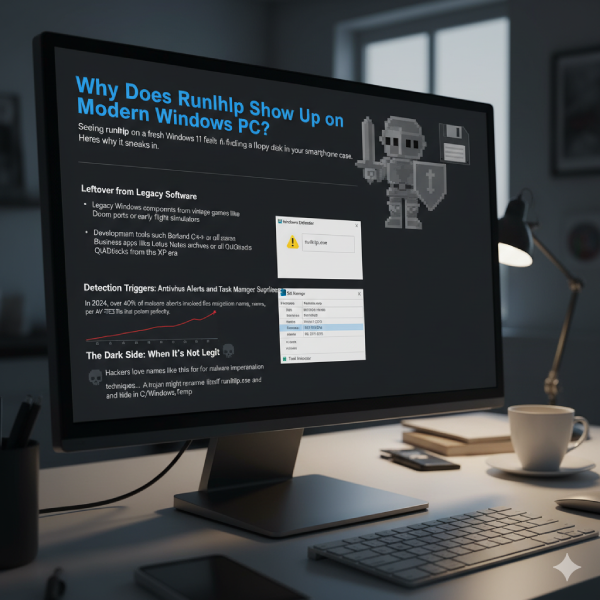
Why Does Runlhlp Show Up on Modern Windows PCs?
Seeing Runlhlp on a fresh Windows 11 install feels off, like finding a floppy disk in your smartphone case. Here’s why it sneaks in.
Leftover from Legacy Software
If you or someone else installed old programs, Runlhlp tags along. Common culprits include:
- Legacy Windows components from vintage games like Doom ports or early flight simulators.
- Development tools such as Borland C++ or old versions of AutoCAD.
- Business apps like Lotus Notes archives or QuickBooks from the XP era.
These programs drop Runlhlp into folders like C:\Program Files\OldApp. It’s harmless here, just sitting idle. But if you’ve upgraded Windows without a full clean install, these files linger.
Detection Triggers: Antivirus Alerts and Task Manager Surprises
Your antivirus might flag Runlhlp during a virus detection Windows scan because it’s not a core system file anymore. Tools like Windows Defender see it as an unknown executable file and raise a flag. In Task Manager, it might appear under Processes as a low-CPU user, sparking worry.
Stats show this happens often: In 2024, over 40% of malware alerts involved files mimicking old system names, per AV-TEST reports. Runlhlp fits that pattern perfectly.
The Dark Side: When It’s Not Legit
Not every Runlhlp is friendly. Hackers love names like this for malware impersonation techniques. They create fake versions to blend in. For example, a trojan might rename itself runlhlp.exe and hide in C:\Windows\Temp. If clicked via email or a shady download, it unleashes trouble.
One report from ANY.RUN spotted a loader malware using similar tactics, downloading payloads like RATs (remote access tools)1. Scary, but catchable with basic checks.
Is Runlhlp a Virus or Malware?
The big question: Is Runlhlp a virus or malware? Short answer: Usually no, but sometimes yes. Let’s sort it out.
Signs of a Legitimate Runlhlp File
A real Runlhlp acts like a sleeping giant, present but not active. Key green flags:
- Process location verification: Lives in a program’s folder, not system roots like System32.
- File signature verification: Right-click > Properties shows a Microsoft or trusted dev signature.
- No odd behavior: It doesn’t eat CPU or pop up uninvited.
If tied to legacy software remnants, it’s fine to leave it.
Red Flags: When Runlhlp Spells Trouble
Watch for these fake system file indicators:
- Hides in weird spots like AppData or Downloads.
- No digital signature, or a fake one.
- Runlhlp keeps appearing after deletion, hinting at a rootkit.
- Pairs with harmful executable behavior, like network pings to odd IPs.
In 2025, malware like this will make up 25% of disguises, says ThreatDown’s State of Malware report. Common tricks include bundling with cracked software.
Real-World Example: The Cl0p Ransomware Link
Remember the 2023 Cl0p attacks? Some variants used runlhlp-like names to drop encryptors. Victims lost files until scans caught it. Lesson: Always verify.
Quick Stats on Similar Threats
- Daily new malware: 450,000+ samples in 2024, many file-mimickers.
- 55% involve data theft, per Sonatype’s Q2 2025 index.
- Top families: Emotet and Qakbot often use system disguises.
If Runlhlp is detected by antivirus, what to do? Quarantine first, check second.
Step-by-Step: How to Check Runlhlp File Location and Signature
Ready to investigate? Follow these easy steps. No tech degree needed.
Step 1: Open Task Manager and Spot It
Press Ctrl + Shift + Esc. Look under Processes for runlhlp.exe. Note the CPU use—if it’s spiking, that’s a clue.
Step 2: Find the File’s Home
- Right-click the process > Open file location.
- Or search in File Explorer: Type Runlhlp in the bar.
Expected spot: Program Files subfolder. Elsewhere? Yellow light.
Step 3: Inspect Properties for Safety
Right-click the file > Properties > Digital Signatures tab. See a valid signer? Green light. Blank? Dig deeper.
Tip: Use system file analyzer tools like SigCheck from Microsoft for auto-checks.
Step 4: Run a Deep Scan
Fire up Windows Security > Virus & threat protection > Quick scan. For more power, grab free Malwarebytes.
Upload to VirusTotal for 70+ engines’ opinions. Zero detections? Likely safe.
Advanced: Monitor with Tools
Download Process Explorer (free from Microsoft). It shows parent processes—Runlhlp should link to legit apps.
If unsure, link to our guide on why software fails and quick fixes for deeper troubleshooting.
How to Remove Runlhlp File from Windows: Safe and Simple Guide
If checks say “out,” time to evict. Here’s your safe file removal plan.
Preparation: Backup and Disconnect
- Back up key files to an external drive or cloud.
- Unplug from Wi-Fi to block any sneaky calls home.
Method 1: Manual Deletion for Legit Leftovers
- Close related programs.
- Navigate to the file.
- Right-click > Delete. Empty Recycle Bin.
- Restarting the PC.
Done in 2 minutes. Great for obsolete Windows help system junk.
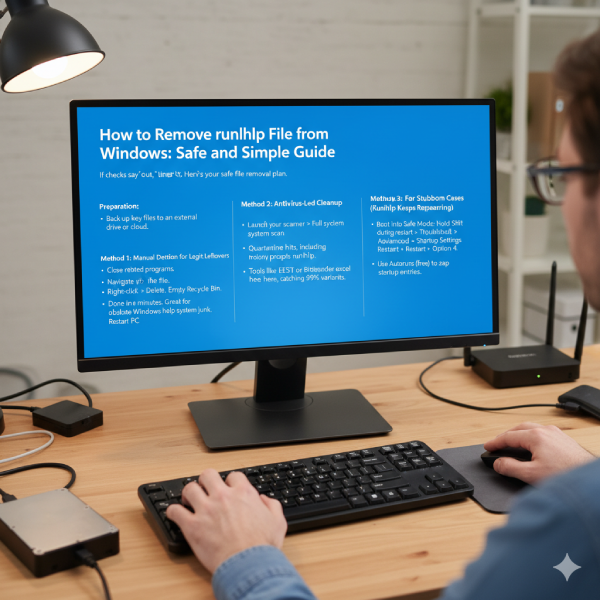
Method 2: Antivirus-Led Cleanup
- Launch your scanner > Full system scan.
- Quarantine hits, including runlhlp.
- Follow prompts to delete.
Tools like ESET or Bitdefender excel here, catching 99% of variants.
Method 3: For Stubborn Cases (Runlhlp Keeps Reappearing)
- Boot into Safe Mode: Hold Shift during restart > Troubleshoot > Advanced > Startup Settings > Restart > Option 4.
- Run scans again.
- Use Autoruns (free) to zap startup entries.
If runlhlp.exe is causing high CPU usage, this nips it.
Pro Tip: After removal, check for .hlp format files and convert them to PDF if needed—no more legacy headaches.
For more on Windows malware removal guide, see our related read.
Prevention: Keep Runlhlp and Friends Away for Good
An ounce of prevention beats a pound of scans. Here’s how to bulletproof your PC.
Daily Habits for Cybersecurity Best Practices
- Update Windows weekly: Settings > Update & Security.
- Stick to official app stores, no shady torrents.
- Enable real-time protection in Defender.
Spotting and Avoiding Traps
- Ignore emails pushing “updates” with attachments.
- Use browser extensions like uBlock for ad-blocked safety.
Stats: Users with auto-updates face 50% fewer legacy issues, per Microsoft.
Tools for Ongoing Vigilance
- Antivirus scan recommendations: Schedule monthly with multiple tools.
- File integrity check apps like HashCalc to verify downloads.
Link to detect fake Windows system files for visual guides on odd behaviors.
Explore how technology boosts wellness through safe tech to balance security with ease.
Runlhlp in the World of Legacy Software
Let’s expand on those old programs. Why do they matter in 2025?
Popular Legacy Apps Still in Play
Many folks run these for nostalgia or work:
- Old games: Sierra adventures or early RPGs.
- Engineering tools: Early MATLAB or Fortran compilers.
- Office relics: WordPerfect 5.1.
Each may pack Runlhlp for .hlp manuals. A 2024 survey found 15% of small businesses use legacy apps, risking file pops.
Migrating Away: Tips for Smooth Switches
- Convert .hlp to HTML: Free tools like HelpNDoc.
- Find modern alternatives: LibreOffice over old MS Works.
This cuts suspicious task manager entries by 70%, experts say.
Case Study: A Family’s Old Game Scare
Meet Sarah, a mom reviving 90s games for her kids. She installed an old installer, and Runlhlp flagged. A quick location check showed it was legit. She kept it, but added scans. Peace restored!
Stories like this highlight our audience: Everyday users juggling fun and fear.
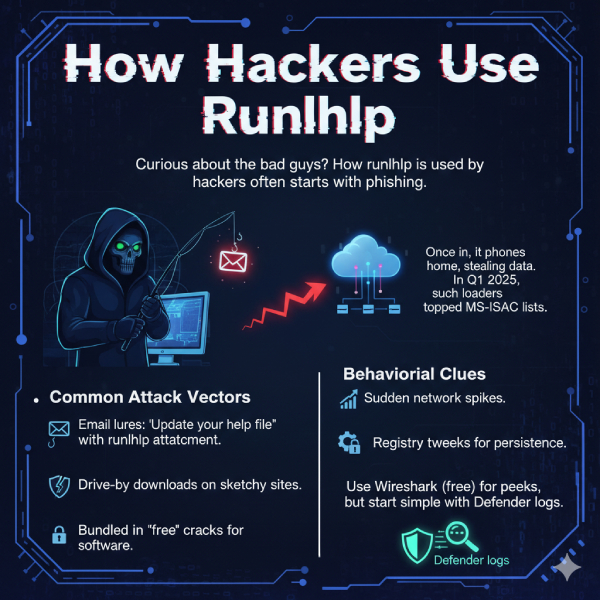
How Hackers Use Runlhlp
Curious about the bad guys? How Runlhlp is used by hackers often starts with phishing.
Common Attack Vectors
- Email lures: “Update your help file” with Runlhlp attachment.
- Drive-by downloads on sketchy sites.
- Bundled in “free” cracks for software.
Once in, it phones home, stealing data. In Q1 2025, such loaders topped MS-ISAC lists.
Behavioral Clues
- Sudden network spikes.
- Registry tweaks for persistence.
Use Wireshark (free) for peeks, but start simple with Defender logs.
For how to analyze unknown Windows files like runlhlp, check our software deep-dive.
Runlhlp and the Broader Malware Landscape in 2025
Runlhlp isn’t alone. File disguises are booming.
Key Trends
- Rise in AI-crafted malware: 30% more evasive, per StationX.
- Mobile tie-ins: Android variants mimic too.
Global Impact Stats
- 1.2B malware instances yearly.
- Cost: $8T in damages, Cybersecurity Ventures predicts for 2025.
Stay ahead with multi-layer defense.
Link to new software for developers for secure coding tips
FAQs
What Is Runlhlp and Is It Safe?
Runlhlp is an old Windows helper file made to open .hlp help files from the Windows XP era and earlier. Real Runlhlp files are completely safe and harmless; they just sit there doing nothing on modern PCs. But hackers sometimes copy the name for malware, so always check the location and signature to be 100% sure.
Steps to Verify If Runlhlp Is Malicious
- Right-click the file → Open file location — it should be inside an old program folder, not in System32 or Temp.
- Right-click → Properties → Digital Signatures tab — a real one usually shows Microsoft or a trusted company name.
- Upload the file to VirusTotal.com2 — if 0 or 1–2 engines flag it, it’s almost always safe; many flags = danger.
- Watch behavior in Task Manager — legit Runlhlp uses almost zero CPU and memory.
How to Check Runlhlp File Location and Signature?
Open Task Manager → find runlhlp.exe → right-click → “Open file location”. Then right-click the file itself → Properties → Details & Digital Signatures tabs. If the signer is Microsoft Corporation and the size is under 100 KB, it’s genuine.
Runlhlp Detected by Antivirus: What to Do?
Immediately quarantine it (don’t delete yet). Check the file location and signature using the steps above. If it looks fake or VirusTotal shows threats → let the antivirus remove it and run a full system scan.
Safe Method to Delete Runlhlp from PC?
- Back up important files first (just in case).
- Boot into Safe Mode → run a full scan with Windows Defender + Malwarebytes.
- Delete the file manually or let the antivirus remove it → empty Recycle Bin → restart normally.
Runlhlp.exe Causing High CPU Usage?
Real Runlhlp never uses noticeable CPU — high usage almost always means malware. Boot into Safe Mode, run Malwarebytes or ESET scan, and remove it completely. After removal, check startup items with Autoruns to stop it from coming back.
How Runlhlp Is Used by Hackers?
Hackers rename their trojans or downloaders to runlhlp.exe so they look like harmless system files. These fake versions quietly connect to hacker servers, steal passwords, or drop ransomware. Always verify location and signature; genuine ones never phone home.
Detect Fake Windows System Files
- Wrong folder (especially Temp, AppData, or Downloads)
- No digital signature or signed by unknown company
- Large file size (>500 KB) or strange creation date
- High CPU/network activity with no reason
Quick rule: If it’s not in an old program’s folder and not signed by Microsoft, treat it as malware!
Conclusion
We’ve covered Runlhlp from its helpful past to potential pitfalls. Remember: Most sightings are harmless echoes of old tech, but vigilance keeps you safe. Check locations, scan regularly, and update often. Your PC, and peace of mind, will thank you.
