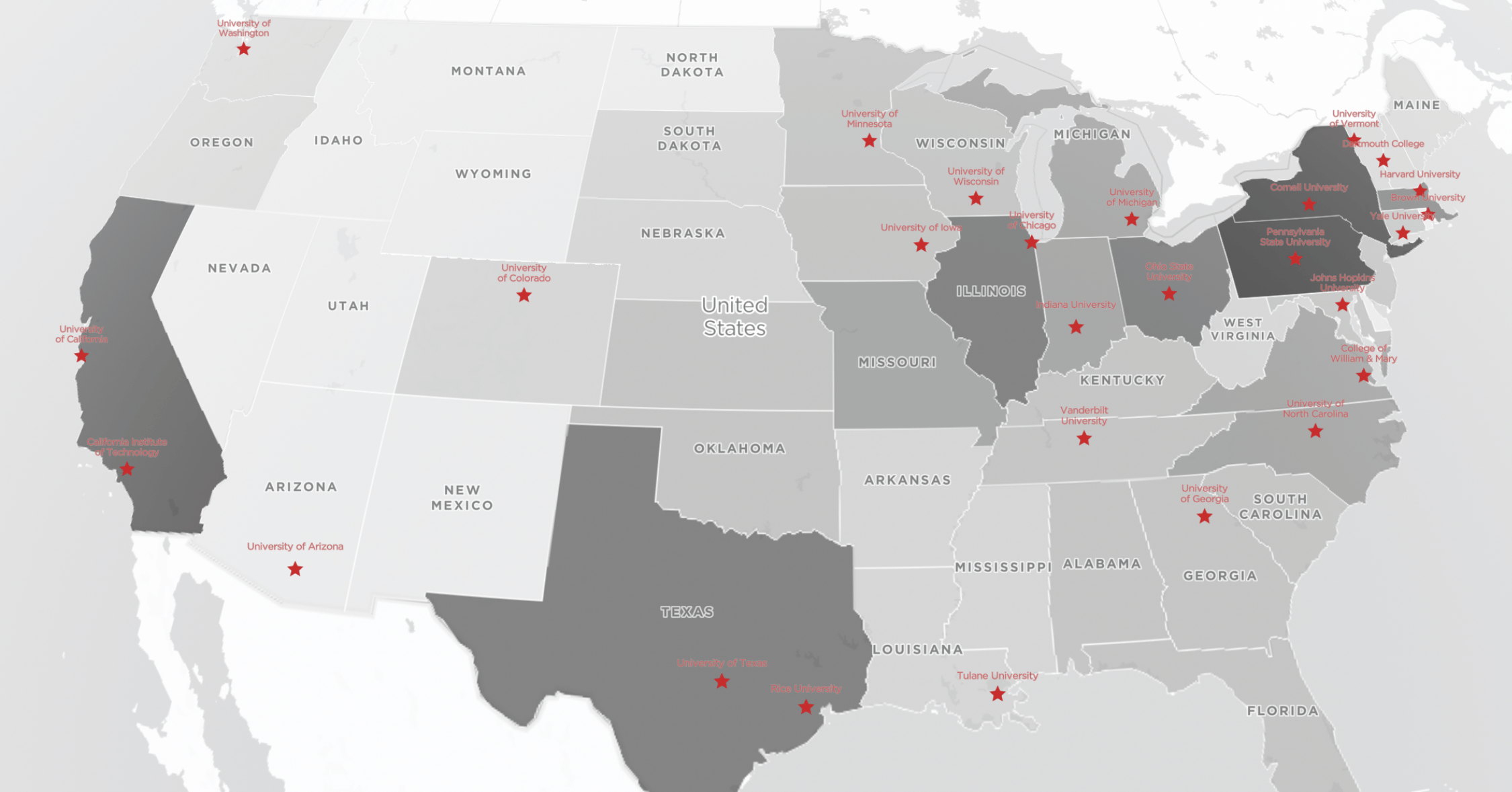
How Many Locations in Clienage9: Exploring the Vast Network of U.S. Higher Education Campuses
Have you ever asked yourself, how many locations in clienage9? That question takes you right to the heart of America’s huge school world!
This guide is super simple. We will show you how many colleges in the U.S. there are. Some are in big, noisy cities. Some colleges are in small, quiet towns. You can pick a public school, a private school, or a community college. The U.S. has lots of places to learn for everyone.
We will talk about college places, how many kids go to college, and easy ways to pick the right school.
America has one of the best college systems in the whole world. Every year, millions of students go to school here. In 2025, about 19 million students are in college. That number is a little lower than before, but it is still really big!
Fewer babies were born a few years ago, so fewer teens are ready for college today. But don’t worry – there are still lots of great schools waiting for you.
It does not matter if you are a kid in high school, a mom or dad, or a big person who wants to go back to school. Knowing how many colleges there are and where they are helps you pick the best one. Let’s start exploring together! Let’s dive in.
The Backbone of U.S. Higher Education: A Quick Overview
The American higher education system blends tradition with innovation. It includes four-year universities, two-year community colleges, and specialized schools. At its core, this system drives economic growth, fostering skills for tomorrow’s jobs.
Key Stats on Total Higher Education Institutions
Here’s a snapshot of the numbers shaping 2025:
- There are 3,931 schools that give college degrees in the United States. This count focuses on schools eligible for federal aid.
- Split: There are about 1,625 state schools. 1,660 private ones that don’t make cash. And fewer ones that do make cash. This is because that part is getting small.
- All spots after high school add up to about 5,800. This counts no-degree plans too. But for main schools, use 4,000 or more.
These figures highlight a resilient network. Most students go to public colleges because they cost less money. Private colleges are famous for good research and feeling special.
Why the Numbers Matter
Knowing how many locations in the clienage9 helps demystify choices. “Clienage9” may seem like a hard word. But in school talk, it makes us think of groups for kids or clients by age. Like fun ways for young folks to start college. But really, it shows a big list of U.S. schools after high school. There are lots of picks for each step.
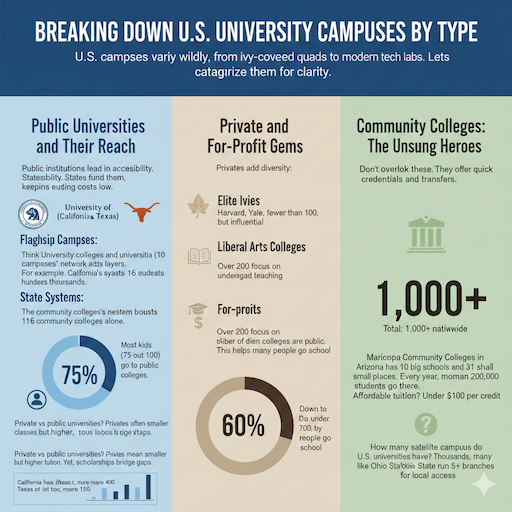
Breaking Down U.S. University Campuses by Type
U.S. campuses vary wildly, from ivy-covered quads to modern tech labs. Let’s categorize them for clarity.
Public Universities and Their Reach
Public institutions lead in accessibility. States fund them, keeping costs low.
- Flagship Campuses: Think University of California (10 campuses) or University of Texas (14). These giants educate hundreds of thousands.
- State Systems: The community colleges and universities’ network adds layers. For example, California’s system boasts 116 community colleges alone.
- Most kids (75 out of 100) go to public colleges. California has the most colleges, more than 400. Texas has a lot too, more than 150.
Private vs public universities? Privates often mean smaller classes but higher tuition. Yet, scholarships bridge gaps.
Private and For-Profit Gems
Privates add diversity:
- Elite Ivies: Harvard, Yale, fewer than 100, but influential.
- Liberal Arts Colleges: Over 200 focus on undergrad teaching.
- For-profits: Down to under 700, hit by regulations.
There are more public colleges than private ones. Six out of ten colleges are public. This helps many people go to school.
Community Colleges: The Unsung Heroes
Don’t overlook these. They offer quick credentials and transfers.
- Total: 1,000+ nationwide.
- Maricopa Community Colleges in Arizona have 10 big schools and 31 small campuses. Every year, more than 200,000 students go there. Affordable tuition? Under $100 per credit.
How many satellite campuses do U.S. universities have? Many big schools like Ohio State run 5+ branches for local access.
How Many Locations in Clienage9: Mapping the Full Picture
When we count every little spot and extra center, there are more than 10,000 places to go to college. But the main big campuses? Only about 4,000. Closer to 4,500.
Counting Campuses vs. Institutions
- Institutions: 4,000+ schools.
- Campuses: Multiple with branches. E.g., Penn State has 24.
- American college campus count: Estimates hit 6,000+ when including satellites.
Use tools like College Navigator for precise searches.
State-by-State Snapshot: Total Number of Colleges and Universities by State
| State | Number of Institutions | Notable Examples |
| California | 450+ | UC System (10 campuses), 116 community colleges |
| Texas | 180+ | UT Austin, Texas A&M (11 campuses) |
| New York | 250+ | SUNY (64 campuses), CUNY (25) |
| Florida | 170+ | University of Florida, 28 public colleges |
| Illinois | 150+ | University of Illinois (3 main campuses) |
This U.S. academic institutions map shows density in the East and West Coasts, with Midwest strongholds in college towns.
The Charm of College Towns in the U.S.: Where Education Meets Community
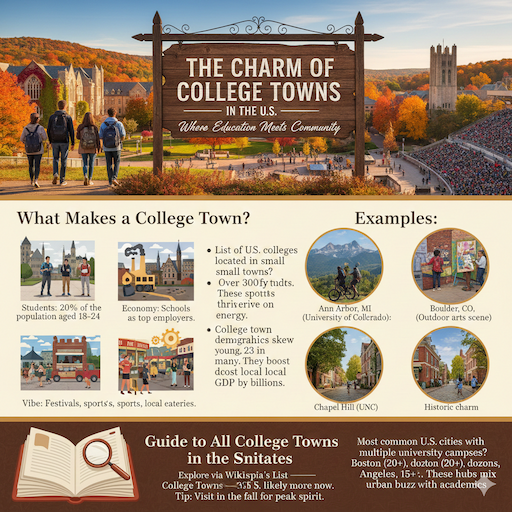
List of U.S. colleges located in small towns? Over 300 qualify as college towns, per studies. These spots thrive on campus energy.
What Makes a College Town?
- Students: 20%+ of the population aged 18-24.
- Economy: Schools as top employers.
- Vibe: Festivals, sports, local eateries.
Examples:
- Ann Arbor, MI (University of Michigan): Vibrant arts scene.
- Boulder, CO (University of Colorado): Outdoor paradise.
- Chapel Hill, NC (UNC): Historic charm.
College town demographics skew young, median age of 23 in many. They boost local GDP by billions.
Guide to All College Towns in the United States
Explore via Wikipedia’s List of College Towns—305 U.S1. entries from 2008, likely more now. Tip: Visit in the fall for peak spirit.
Most common U.S. cities with multiple university campuses? Boston (20+), New York (dozens), Los Angeles (15+). These hubs mix urban buzz with academics.
Trends Shaping Higher Education Institution Distribution in America
Numbers shift. Why?
Declines and Mergers
- For-profits: Plummeted 50% since 2012.
- Small privates: 10+ closures yearly, like recent ones post-COVID.
- Birthrate dips: Fewer 18-year-olds by 2025.
Yet, mergers save legacies, e.g., Boston U. absorbed Wheelock.
Growth Areas
- Online/hybrids: Boosting “virtual campuses.”
- Education statistics in the United States: Enrollment up 3% in spring 2025.
- International draw: 1.2 million foreign students.
How many university campuses are there in the United States in 2025? Steady at ~4,000 institutions, with campuses edging up via expansions.
Practical Tips: Choosing Your Spot
Ready to pick? Follow these steps:
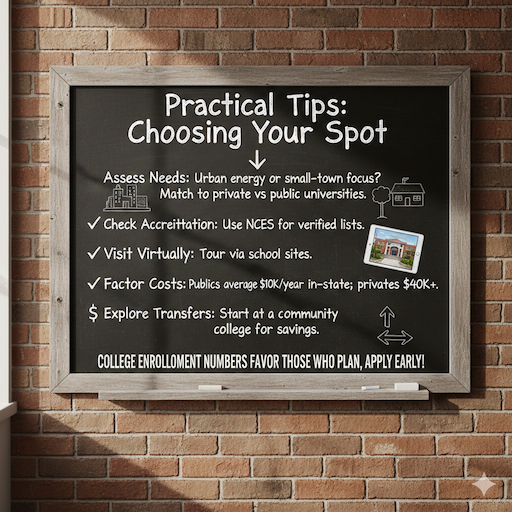
- Assess Needs: Urban energy or small-town focus? Match to private vs public universities.
- Check Accreditation: Use NCES for verified lists.
- Visit Virtually: Tour via school sites.
- Factor Costs: Publics average $10K/year in-state; privates $40K+.
- Explore Transfers: Start at a community college for savings.
College enrollment numbers favor those who plan, apply early!
Challenges and Solutions in the System
No system’s perfect. Declining enrollment hits small schools, but innovations help.
- Mental Health: Top stop-out reason; seek supportive campuses.
- Affordability: Aid covers 70% for qualifiers.
- Diversity: 40% underrepresented minorities enrolled.
Reassurance: Options grow. Hybrids suit busy lives.
Case Study: Spotlight on Regional Leaders
Take Arizona’s Maricopa system2: 10 colleges, 31 sites, 600+ programs. It transfers to 40 universities, providing seamless paths.
Or California’s sprawl: 10 UC campuses, each a world unto itself.
For deeper dives, read US News on changing numbers3.
Future Outlook: What’s Next for Campuses?
By 2030, expect consolidations but tech booms. AI tools, micro-credentials—campuses evolve.
Higher education institution distribution in America will cluster in growth states like Texas, Florida.
Stay ahead: Follow education statistics in the United States via NCES.
FAQs
How many colleges are in the United States?
There are more than 4,000 colleges all over the country. Some are big, some are small, but everyone can find one.
Are there more public or private colleges?
There are more public colleges. Six out of every ten colleges are public. That means lots of places cost less money.
Where do most students go to college?
Most students (75 out of 100) go to public colleges. Public colleges cost less, so more kids can go there.
Which state has the most colleges?
California has the most colleges – more than 400! Texas comes next with more than 150.
How many students go to college in America right now?
About 19 million students are in college in 2025. That is a super big number of people learning new things!
What is a community college?
A community college is a school that lasts two years. It costs very little money and is close to home for many people. You can move to a bigger college after if you want.
Are there colleges in small towns?
Yes! Lots of colleges are in small, quiet towns. These towns love their college and have fun games and parties.
Can grown-ups go back to college?
Yes! Moms, dads, and all grown-ups can go back to college any time. Many schools are happy to help big people learn new jobs.
Conclusion
The U.S. has more than 4,000 colleges. They are all over the country. This gives everyone a good chance to go to school. From college towns in the U.S. to mega-systems, this network empowers dreams. We’ve covered some colleges in the U.S., trends, and tips to guide you.
See Also
- Air Busan Has Issued a World-First Ban on Power Banks: Your Simple Guide to Safe Travel
- Veneajelu: A Journey into Finnish Boating Traditions
- Maasgracve: Your Go-To Hub for Business, Tech, Travel, and Green Living
